I told clients for almost two decades that a chair's whole job is to disappear. You shouldn't think about it. So when a client in Grandview Heights asked me if she should get a wobble stool for her home office instead of a real chair, my honest first answer was no. I figured it was a gimmick built for people who watch too many posture videos on their phones. I didn't say that to her. I said I'd test one myself first and get back to her.
That test turned into ten weeks at my own desk in Columbus, standing desk raised, laptop docked, the same routine I run five days a week helping people set up their home offices. I bought the SONGMICS Ergonomic Wobble Stool, the height-adjustable one that swivels and tilts on a domed non-slip base, and I used it as my only seat option for that stretch. No backup chair waiting in the closet. If it failed, I was going to feel it in my hips by Thursday.
The Quick Verdict
It genuinely changes how you sit through a workday, but it is not a chair replacement for everyone, and the price surprised me for what's basically a padded disc on a pole.
Amazon Check Today's Price →Curious if the wobble is more gimmick or genuine fix? See today's price and specs.
The SONGMICS Wobble Stool adjusts from 23.6 to 33.3 inches, which covers most standing desks without a riser. Check current availability before you commit a corner of your office to it.
Amazon Check Today's Price on Amazon →How I Actually Tested This (Not Just a Weekend)
A lot of reviews you'll find online are written by someone who unboxed a product, sat on it for an afternoon, and shipped an opinion by Friday. That's not useful to anyone spending real money on a home office. I set a rule for myself: no swapping back to my old chair for ten straight weeks, tracked in a simple notebook next to my monitor. Every day I wrote down how my lower back felt at the 3pm mark, since that's when years of desk work has always hit me hardest.
I also didn't cherry-pick an easy week. Weeks three and four included two full days of back-to-back client calls where I was glued to the desk for six or seven hours at a stretch, which is exactly the scenario where a bad chair, or a bad stool, shows its weaknesses fastest.
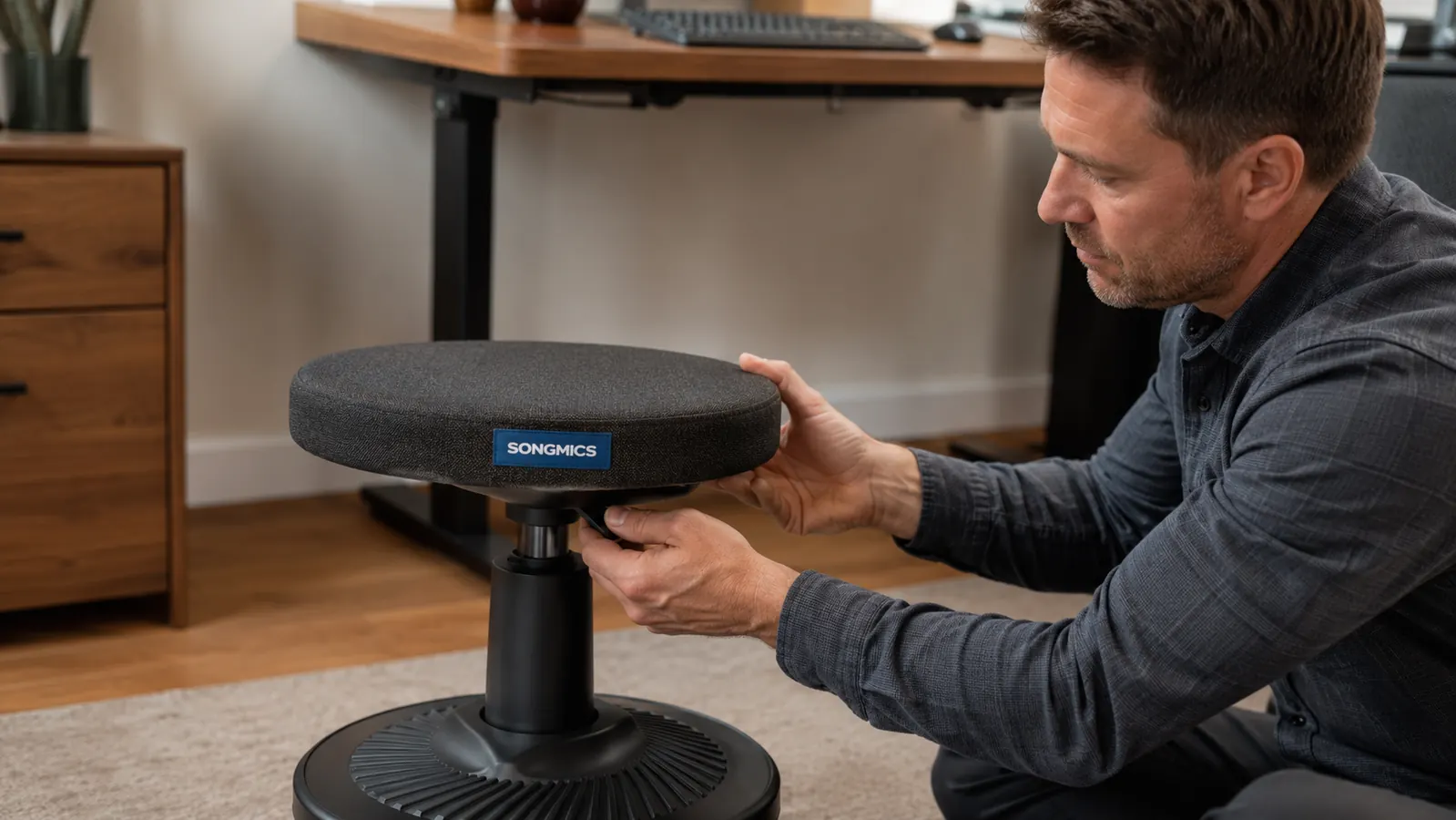
The setup itself took about fifteen minutes out of the box, mostly attaching the base and adjusting the gas lift lever to my desk height. No tools beyond what came in the box. That part matched what I've seen with most SONGMICS furniture pieces I've installed for clients over the years, straightforward hardware, clear instructions, nothing that needed a second person.
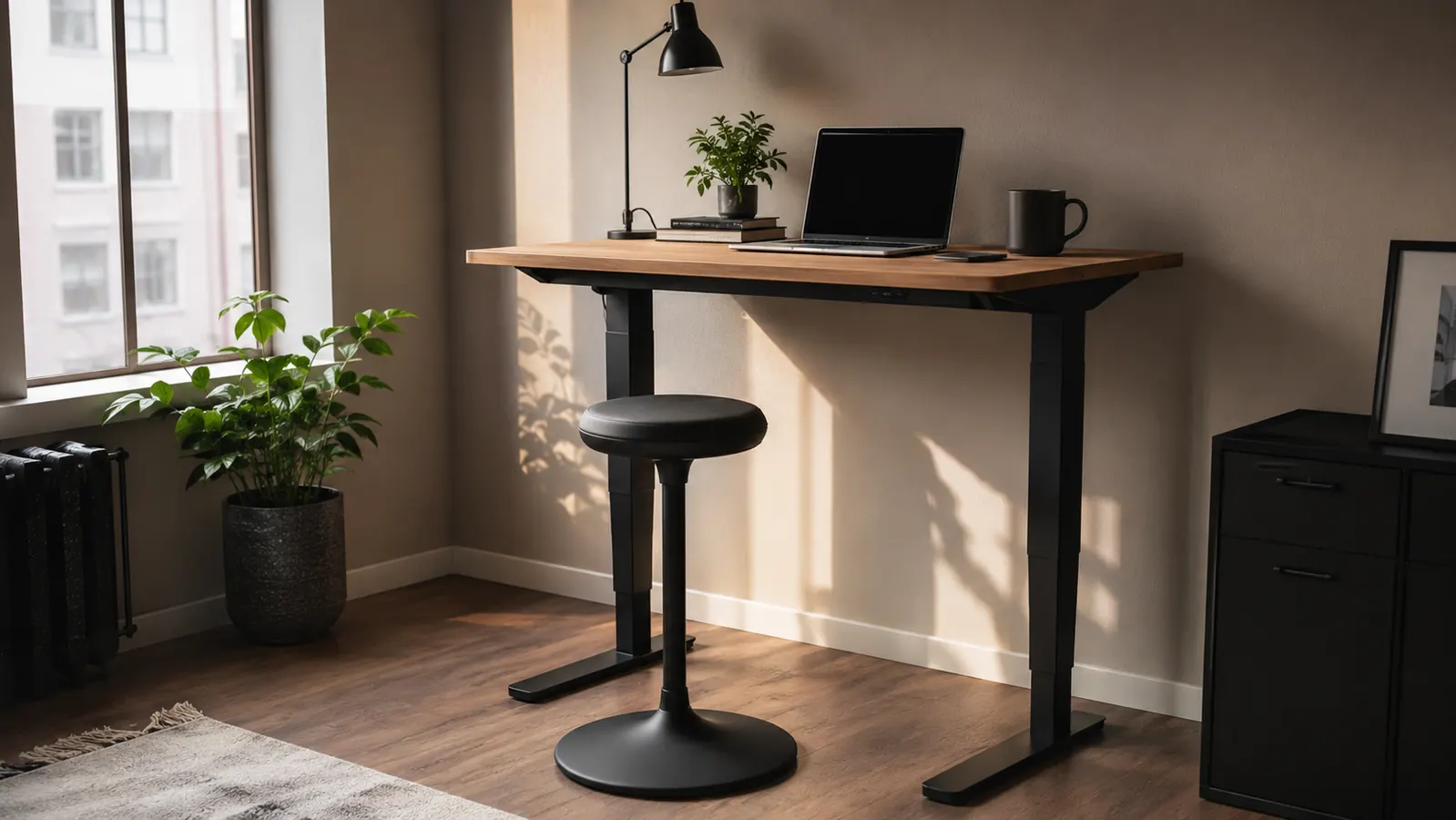
I'm six-foot-one and just over 200 pounds, and I mention that because a lot of stool reviews come from people who don't say anything about their frame, which matters when you're talking about balance and weight distribution on a domed base. My desk sits at 41 inches for standing work, and I dropped it to 29 inches for the sitting portions of my day, which put the stool right in the middle of its adjustable range instead of maxed out at either end. That mattered more than I expected. When a stool is cranked to its ceiling height, the wobble gets exaggerated and the balance point gets harder to hold. Sitting mid-range kept things predictable.
The Wobble Mechanism: What Nobody Explains Before You Buy
Here's the thing product listings gloss over. The stool doesn't wobble because it's unstable. It wobbles because the base is domed, so your body is constantly making tiny corrections to stay balanced. That's the whole mechanism, and it's simpler than the marketing copy makes it sound. Your core, hips, and legs are doing small amounts of work the entire time you sit, instead of a chair doing all that work for you.
What surprised me is how much range of tilt the stool actually allows. I expected a subtle rock, maybe five or ten degrees. It's more than that. You can lean forward to reach a lower cabinet, rotate to grab a folder off the printer stand, or shift your weight side to side without ever standing up. Once you stop bracing against the wobble and let your hips move with it, the stool gets a lot more comfortable than it looks like it should be.
People who've tried a yoga ball at their desk before will recognize some of this. A ball forces constant, big corrections that get tiring fast and roll away the second you stand up. The SONGMICS stool solves both of those problems. The dome is shaped to give you movement without letting the base actually travel across the floor, and there's a swivel lock built into the base if you want to kill the rotation and just keep the tilt. I used the lock during video calls, honestly, since a slow spin toward the window mid-meeting isn't a great look. Outside of calls, I left it unlocked and let the stool do what it's built to do.
The seat pad itself is a firmer foam than I expected from photos, closer to a bike saddle than a cushioned office chair. That's a deliberate choice, a softer pad would compress under active movement and lose support fast, but it means the first few sits feel less plush than people picture when they hear the word stool.
What Six Weeks In, My Body Actually Told Me
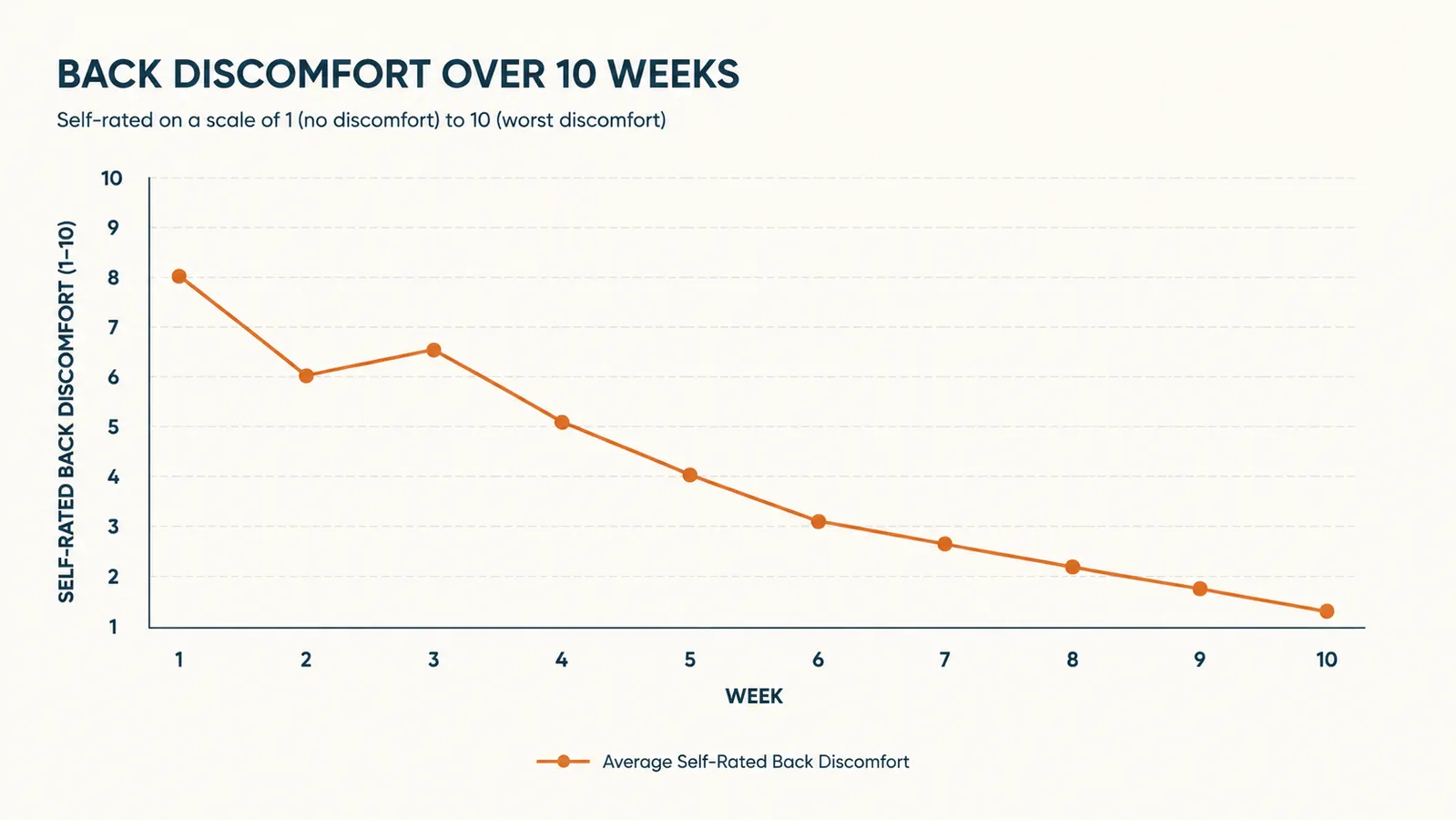
The first week was rough, and I want to be straight about that instead of pretending it was love at first sit. My lower back was sore in a new way by day three, not pain exactly, more like the soreness you get from a workout you're not used to. That tracks with what physical therapists have told me over the years about active sitting products. You're recruiting muscles that a normal chair lets go dormant.
By week three, the notebook entries started shifting. My afternoon back discomfort, which used to hit a 6 or 7 out of 10 most days in a standard task chair, was sitting closer to a 4. Week five and six leveled out around a 3, and stayed there through the rest of the test. That's not a miracle, and I'm not going to pretend the stool cured chronic back issues, but the trend was real and it held.
I also started tracking how long I could comfortably stay seated before needing to stand, since that's a number my clients ask about constantly. In week one, I was up and moving every twenty minutes or so, mostly out of restlessness more than discomfort. By week six that stretched to closer to forty-five minutes at a time, which lines up with what I'd expect from a body that's built up the small stabilizing muscles the stool asks you to use. None of this is scientific in a lab sense, it's one guy with a notebook, but ten weeks of consistent daily numbers is more than most reviews bother collecting before publishing an opinion.
The other change I didn't expect was how much more I moved during the day overall. Standing up to stretch or walk around felt like less of a decision when I was already half-standing on an active stool, versus getting up out of a deep bucket seat. Small thing, but it added up across a week of calls.
The Things That Actually Annoyed Me
No armrests, obviously, which some people know going in and others don't think about until they're three days into typing without anywhere to rest an elbow during a long email. If you rely on armrests for wrist support, this is a real adjustment, not a minor one.
There's also no back support at all. On days I was drained, usually late in the week, I caught myself slumping forward with nothing behind me to lean into. A standard chair at least gives you a lazy option. This stool doesn't, which is either a feature or a flaw depending on how disciplined you are about posture by 4pm on a Friday.
There's also a temperature thing nobody mentions. Columbus mornings in the fall get cold fast, and a firm foam pad with no fabric cushioning takes a minute to warm up once you sit down, especially before the space heater under my desk kicks in. It's a minor gripe, but if you keep your office cool overnight, expect a chilly first few minutes. The base is plastic too, and while it hasn't cracked or shown stress marks after ten weeks of daily rolling and swiveling, I did notice a faint squeak develop around week seven near the gas lift collar. A few drops of household oil quieted it down, but it's worth knowing it can happen.
And I'll say it plainly since a lot of reviews won't. For what you're getting, a foam disc, a gas lift pole, and a plastic dome base, the price felt high compared to a basic task chair with more parts and more engineering. SONGMICS builds a solid product here, the swivel is smooth and the height range is genuinely useful, but you're paying for the concept as much as the materials.
Alternatives I Considered Before Buying
Before I settled on this stool, I looked hard at keeping a normal drafting chair with a footring, since that's the default recommendation I've given clients for years. I actually wrote up the full side-by-side in SONGMICS Wobble Stool vs a Drafting Chair if you want the direct comparison, because the honest answer is it depends on what you're trying to fix.
I ruled out a yoga ball almost immediately, mostly because clients have told me for years that balls end up in a closet within a month once the novelty wears off, and they don't work at all with rolling under a desk. A kneeling chair was the other option on my short list, but those put a lot of pressure on the shins and knees over long sessions, which felt like trading one discomfort for another rather than solving the actual problem. The SONGMICS stool won out because it let me keep moving without introducing a new pressure point, and because the height range meant I wasn't locked into one desk configuration.

I also read through a stack of posture research before committing to the test, which is where a lot of the active sitting claims either held up or fell apart. If you want the reasoning behind why this kind of seating helps some people and not others, I laid out the specifics in 10 Reasons Active Sitting on a Wobble Stool Improves Posture.
For readers who are still deciding whether an active stool fits their situation at all, our longer field test covers the first four months in more detail, including how it held up under daily standing-desk use, in SONGMICS Wobble Stool Review: 4 Months of Daily Standing-Desk Use.
What I Liked
- Real, measurable improvement in afternoon back discomfort after the adjustment period
- Smooth swivel and a wide 23.6 to 33.3 inch height range that fits most standing desks
- Small footprint, easy to tuck away, easy to move between rooms
- Fifteen-minute setup with no extra tools needed
Where It Falls Short
- No back support at all, which is a real adjustment for anyone used to leaning back
- No armrests, which matters more than most buyers expect on long typing days
- Firm foam pad takes real getting used to compared to a cushioned chair
- Price feels high for the amount of material and engineering involved
The wobble isn't a flaw in the design. It's the entire design. Once I stopped fighting it, my body figured out what to do.
Who This Is For
This stool makes the most sense for someone who already has a standing desk and alternates between sitting and standing through the day, since it fits naturally into that rotation rather than replacing your main seat entirely. It's also a solid fit for anyone whose main complaint is stiffness or a dull ache from sitting too still, not sharp or diagnosed back pain. If you're the type who fidgets, bounces a knee, or shifts positions constantly anyway, you'll likely adapt to the stool faster than most.
Who Should Skip It
If you have a diagnosed back condition, disc issues, or anything a doctor has specifically told you needs lumbar support, talk to them before you swap out a supportive chair for this. It's also not the right pick if you sit for eight or nine hours a day with minimal breaks, since even the improved version of that routine on an active stool can wear on you without back support to fall into when you're tired. And if armrests are non-negotiable for your wrists, this isn't going to work no matter how good the balance mechanism is.
Still weighing it against your current chair? Get the current price before deciding.
Ten weeks in, this earned a permanent spot in my rotation, but it's not a universal fix. See today's price and current availability for the SONGMICS Wobble Stool and decide if it fits your setup.
Amazon Check Today's Price on Amazon →