I've been setting up home offices for other people for about twelve years now, first as part of a facilities team and now on my own as a consultant based here in Columbus, Ohio. When a client tells me their back hurts by 2pm and their standing desk isn't the fix they hoped it would be, the SONGMICS Wobble Stool is usually one of the first things I bring up. I bought my own back in March, mostly to test it before recommending it to anyone else, and it's been under my desk almost every weekday since.
This isn't a stool I picked because it looked good in a product photo. I picked it because I'd already gone through two cheaper wobble stools with clients that cracked at the base within a few months, and I wanted something with a metal frame that could survive daily use from a 190 pound guy who fidgets a lot at his desk. Four months in, here's what actually happened, the good and the parts I'd flag before you buy.
The Quick Verdict
Solid, adjustable, and it genuinely keeps you moving through the day, just budget extra time to build core strength before long stretches on it.
Amazon Check Today's Price →Tired of the 2pm Slump at Your Standing Desk?
The SONGMICS Wobble Stool keeps your core engaged and your legs moving without making you choose between sitting and standing all day. Check today's price and see if it fits your setup.
Amazon Check Today's Price on Amazon →How I've Used It at My Own Desk
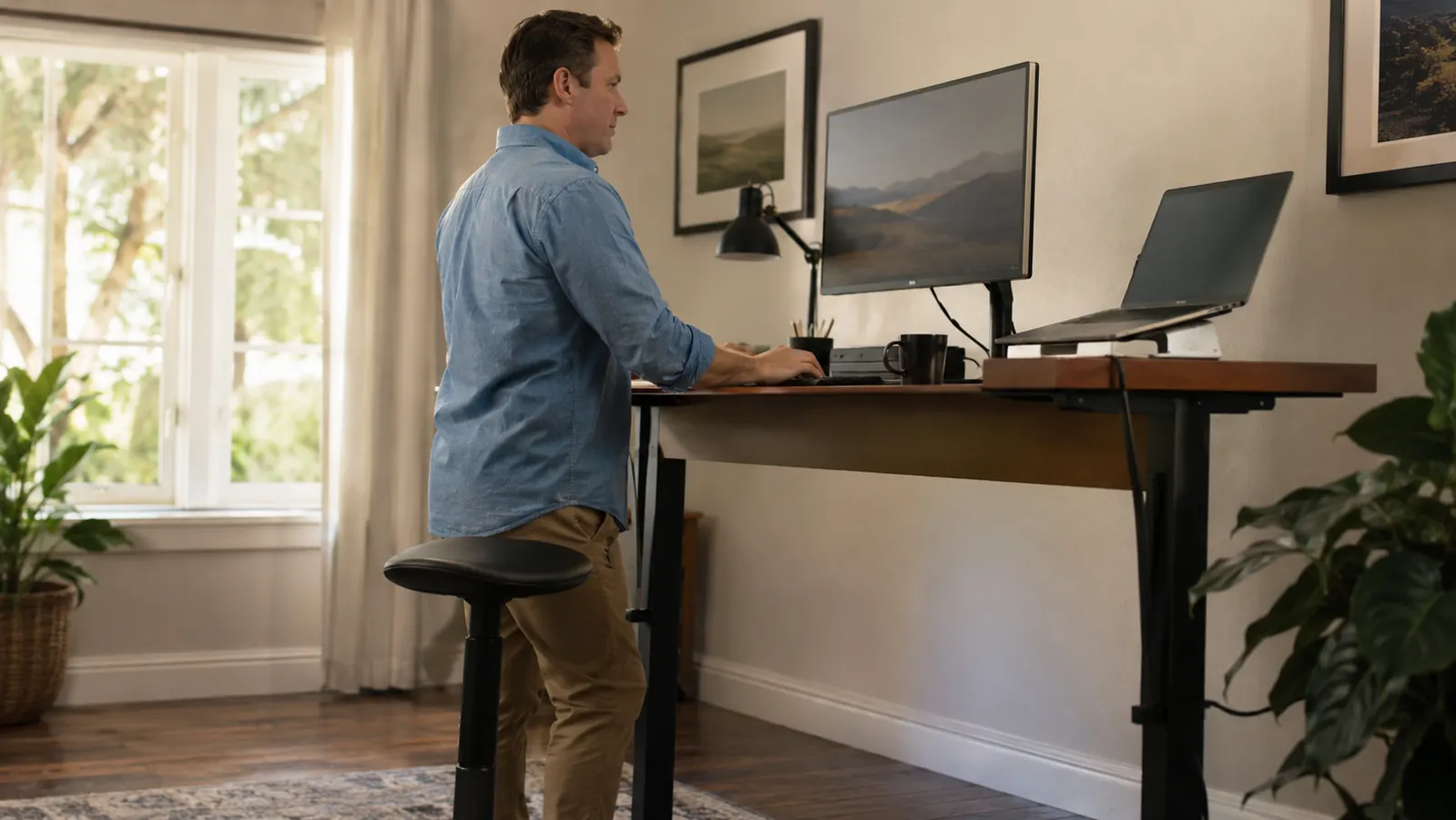
My desk is a 48 inch adjustable model I raise and lower a few times a day, and the wobble stool lives underneath it at the low end when I'm not standing. I run it at 27 inches for my desk height, which puts my elbows at roughly 90 degrees when I'm typing. Getting that height dialed in took about a week of small adjustments, nothing dramatic, just a half inch here or there until my shoulders stopped creeping up toward my ears by lunchtime.
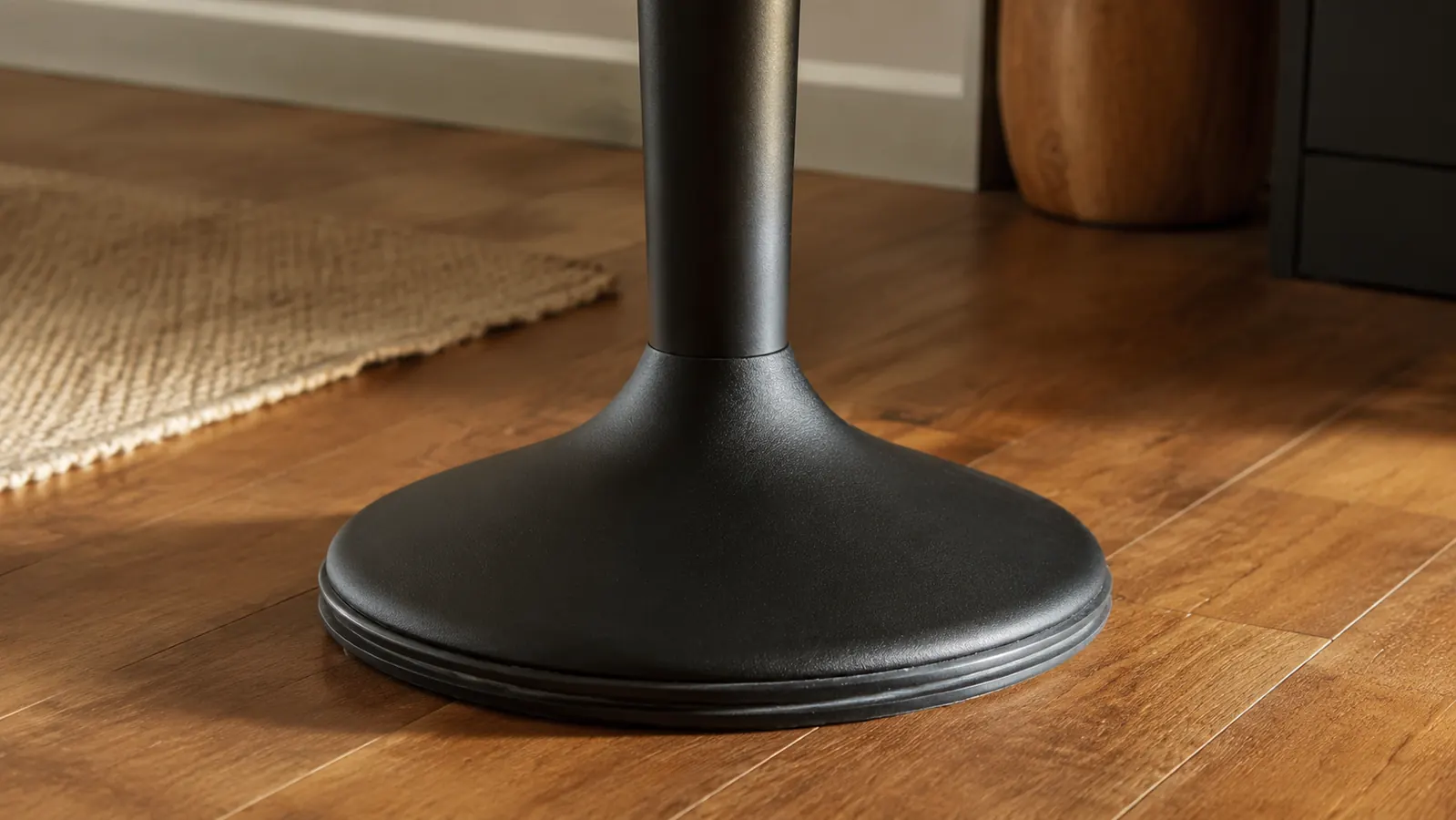
The base is a weighted, rounded dome, not a full sphere, so it tips in a controlled arc rather than spinning out from under you. The first few days I kept one hand on the desk edge out of habit. By the end of week two I wasn't thinking about it at all, which is honestly the whole point of active sitting furniture. If the stool still requires conscious balancing effort after two weeks, something is off, either the height is wrong or your core just needs more time.
I use it in blocks, usually 45 minutes to an hour, then I either stand or switch to a regular chair for calls where I need to sit still and take notes. That rotation matters more than the stool itself. A client of mine tried sitting on hers for six straight hours the first week and ended up sore in a way that had nothing to do with the product and everything to do with jumping in too fast.
I keep a regular task chair about three feet away so the swap takes seconds, not a whole reset of my workspace. That small detail is what actually makes the rotation stick day to day. Clients who set the wobble stool up in a spare room, separate from their main desk, almost never end up using it consistently, because the friction of getting up and walking somewhere else kills the habit before it forms.
The Wobble Mechanism: How It Actually Feels After Four Months
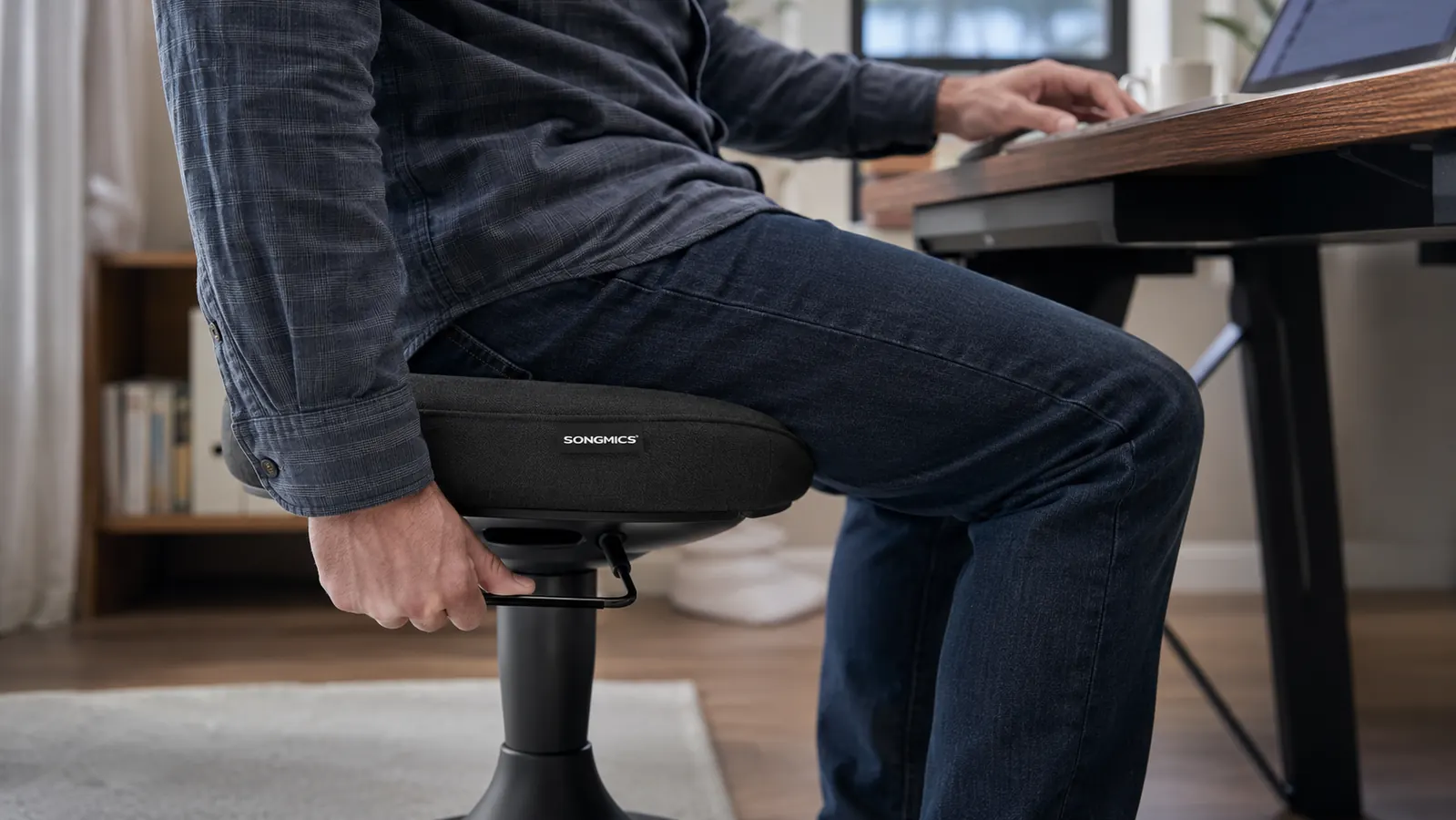
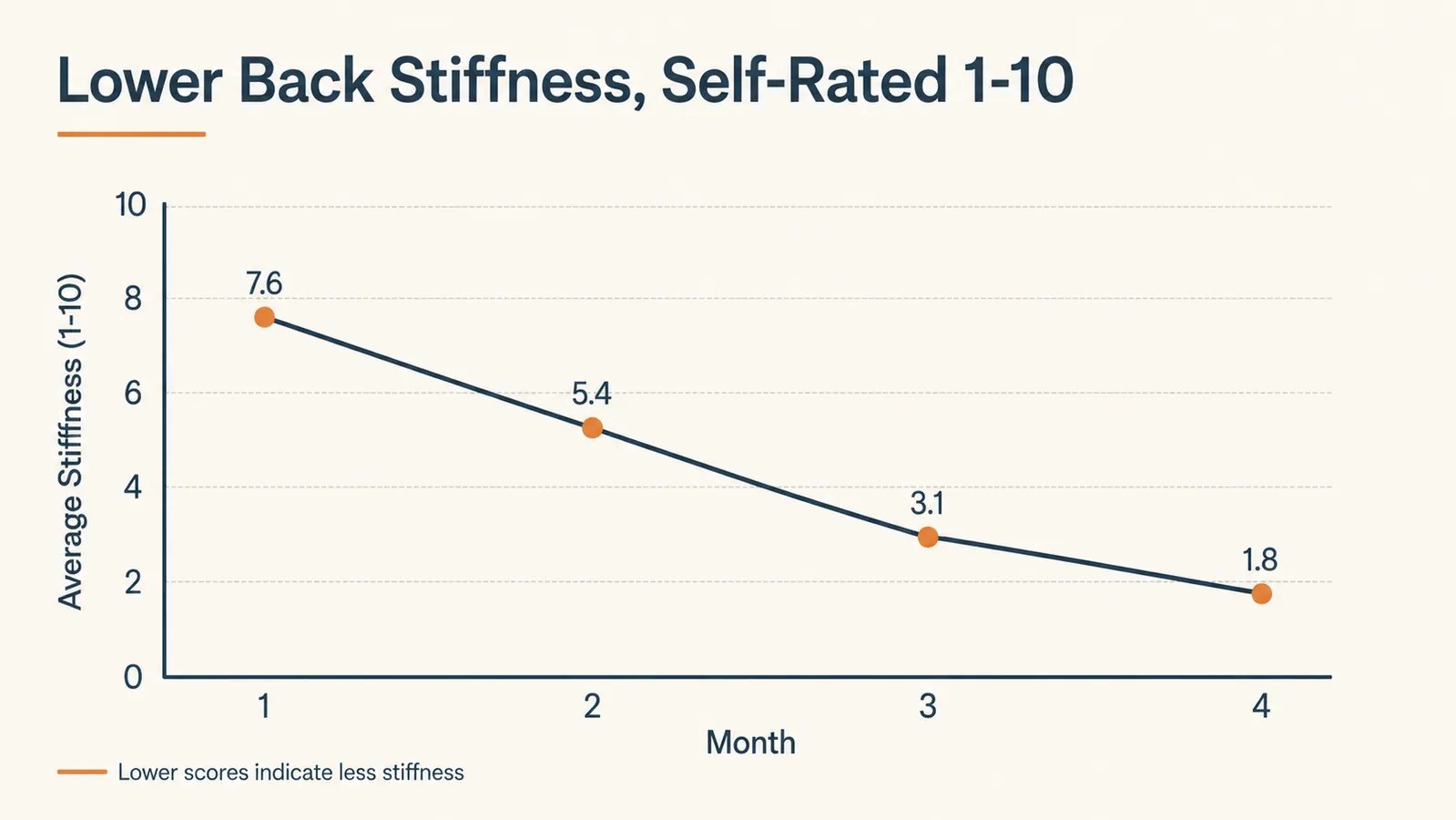
The tilt range on this stool is generous, probably more than most people expect from photos. It rocks a good 15 to 20 degrees in any direction before you hit resistance, which is enough to genuinely work your obliques and lower back stabilizers over the course of a day. I noticed the difference in my core within about three weeks, less lower back stiffness getting up from my desk, which had been a real problem for me before this.
The non-slip base has held up fine on both my hardwood office floor and the low-pile carpet in the guest room I sometimes work from. No sliding, no marks left behind. I did put a cheap plastic chair mat under it early on out of habit and honestly didn't need to, the rubberized ring on the bottom grips well enough on its own.
Where the wobble mechanism gets tiring is during long video calls where you're trying to hold relatively still and look composed on camera. Micro-adjusting your balance while also trying to look attentive in a Zoom window is a skill, and it took me longer to get comfortable with than the basic sitting itself. I now just switch to my regular office chair for anything over 30 minutes on camera.
The seat cushion itself is on the firmer side. I added a thin gel pad after about six weeks, not because it was uncomfortable exactly, but because my sit bones started to notice after two or three hour stretches. That's a minor add-on cost worth knowing about going in rather than discovering it later.
Build Quality and What's Held Up (and What Hasn't)
The SONGMICS frame is steel, powder coated, and it hasn't so much as squeaked in four months of daily adjustment and tilting. That matters to me because the two stools I tried before this one both developed a creak in the height adjustment collar within eight weeks. The difference between this and a standard drafting chair shows up most clearly right here, in how the mechanism holds up under repeated small movements rather than one fixed position.
The height adjustment is a pneumatic lever, standard gas lift, and it's stayed firm. No slow sinking over time, which I've seen happen on cheaper office stools after six months or so. I'll keep watching that over the next year since gas lifts are usually the first thing to go on any adjustable seat.
The one component I'd call a genuine weak point is the plastic cap where the seat pad meets the frame. It's developed a small amount of play, not dangerous, but noticeably looser than when it arrived. Nothing that's affected function yet, but I'll update this if it gets worse. For what it's worth, the online reviews I've read mention the same spot, so it's a known thing, not a fluke on my unit.
Comparing Notes: What My Clients Have Reported
I don't just take my own word for it when I recommend a SONGMICS product to someone. I followed up with the six clients I mentioned earlier at roughly the two month mark, and the feedback was consistent enough that I trust it. Four of them said their end-of-day lower back stiffness had noticeably eased. One said she barely noticed a difference but liked having a lighter, more portable seating option to move between her desk and a reading nook.
The sixth client, a guy in his mid 50s with an older knee injury, found the stool uncomfortable for anything past 30 minutes and went back to his standard chair most days. That's useful data too. It tells me this product rewards people with reasonably healthy joints and some baseline core strength more than it helps people already managing a specific physical limitation.
None of the six reported any structural issues with their units in that window, which lines up with my own experience. The complaints I heard were all about comfort preference, not durability, and that split roughly matched what I'd expect from any active sitting product, some bodies take to it faster than others.
Who It's Best For: My Take After Recommending It to Six Coworkers
I've now pointed six different clients toward this exact stool, mostly people in their 30s and 40s working from a converted bedroom or basement office who complain about stiffness rather than acute pain. It works well for that group because the core engagement is gentle enough to build up gradually rather than shocking your body on day one.
It's also worked out well for two clients who split their day between a standing desk and traditional seated work. The wobble stool became the middle option, less committal than fully sitting, less fatiguing than standing for eight hours straight. One of them told me it changed how she thought about her whole workday rhythm, not just her chair.
For anyone curious what that kind of shift actually feels like day to day, I wrote up a longer story about how a wobble stool changed my own back pain situation after a few years of standing desk use that wasn't cutting it on its own.
I'd add one more group to that list, people who spend a lot of their day on the phone rather than typing. The wobble motion is easy to sustain when your hands are free, and a couple of clients in sales roles told me it actually kept them more alert on long call blocks than sitting still ever did.
Tradeoffs Nobody Tells You About
The biggest tradeoff is that this isn't a chair you use eight hours a day, five days a week, straight through. It's a rotation tool. If you're expecting to replace your office chair entirely, you'll be disappointed and probably sore. Think of it as one part of a setup, not the whole solution.
There's also a learning curve that's real, not just marketing language. The first week, my productivity actually dipped slightly because I was paying attention to staying balanced instead of my work. That passed, but I'd rather tell you upfront than have you think something's wrong when it happens to you too.
Price is the other honest consideration. It's not the cheapest wobble stool on Amazon, and I get why some people balk at that when a basic option exists for less. But given how the cheaper ones held up for my clients, I think the build quality difference is worth the current price if you're going to use it daily for more than a few months.
One more thing worth mentioning, assembly took me about 20 minutes with the included tools, no surprises, no missing hardware. That's a small detail, but I've had enough clients get frustrated by confusing instructions on cheaper office furniture that it's worth calling out when a product gets it right.
What I Liked
- Steel frame has stayed solid and squeak-free after four months of daily use
- Height adjustment (pneumatic lever) still holds firm, no slow sinking
- Wobble range is generous enough to genuinely engage core and lower back stabilizers
- Non-slip base grips well on both hardwood and low-pile carpet
- Works as a natural middle option between sitting and standing desk use
Where It Falls Short
- Seat cushion is firm; most people will want a gel pad add-on for longer sessions
- Plastic cap where seat meets frame has developed minor play over time
- Not comfortable for long video calls where you need to hold still
- Real learning curve in week one, some initial productivity dip while adjusting
- Costs more than basic wobble stools, though build quality reflects that
The wobble mechanism isn't a gimmick. It's a slow, boring kind of core work you don't notice you're doing until your back stops complaining by 3pm.
Who This Is For
If you already have a standing desk and find yourself either standing too long out of guilt or sitting in a regular chair out of exhaustion, this fills the gap. It's also a solid fit if you've read about the tradeoffs other reviewers have run into and still want to try active sitting without committing to a full ergonomic overhaul of your office.
Who Should Skip It
If you have an existing lower back injury, balance issues, or you sit on video calls more than two or three hours a day, I'd skip this one or at least pair it with a proper chair for those specific blocks. It's also not the right pick if you're hoping one product solves years of poor desk posture on its own. It helps, but it's a piece of the puzzle, not the whole fix.
Ready to Stop Choosing Between Sitting and Standing All Day?
Four months in, the SONGMICS Wobble Stool is still the first thing I recommend to clients dealing with mid-afternoon stiffness. See today's price and specs on Amazon before you decide.
Amazon Check Today's Price on Amazon →