

I've been setting up home offices for other people for about twelve years now, first as part of a facilities team and now on my own as a consultant based here in Columbus, Ohio. Ohio winters are dry, and every year without fail I get calls from clients whose skin is cracking around the knuckles, whose eyes feel gritty by 3pm, and who assume it's allergies until I walk in and check the humidity reading on my little hygrometer and it's sitting at 22 percent. My own home office runs the exact same forced-air furnace setup, so back in April I picked up the GENIANI Portable Cool Mist Humidifier to run under my own desk for a season before I'd recommend it to anyone else.
This isn't the biggest humidifier on the market, and that's the point. I didn't want a console unit eating up floor space or something loud enough to interrupt calls. I wanted something small enough to sit on the corner of a desk, quiet enough to run through an eight hour workday without anyone noticing, and simple enough that refilling it wouldn't become its own chore. Three months in, here's what actually happened, the parts that worked and the parts that annoyed me enough to flag before you buy one for your own setup.
The Quick Verdict
Small, quiet, and genuinely effective for a single desk zone, just expect to refill it more than the marketing photos suggest and to clean the tank weekly.
Amazon Check Today's Price →Dry Winter Air Wrecking Your Skin and Sinuses at Your Desk?
The GENIANI Portable Cool Mist Humidifier puts moisture right where you actually sit instead of trying to condition an entire room. Check today's price and see if it fits your desk.
Amazon Check Today's Price on Amazon →How I've Used It at My Own Desk
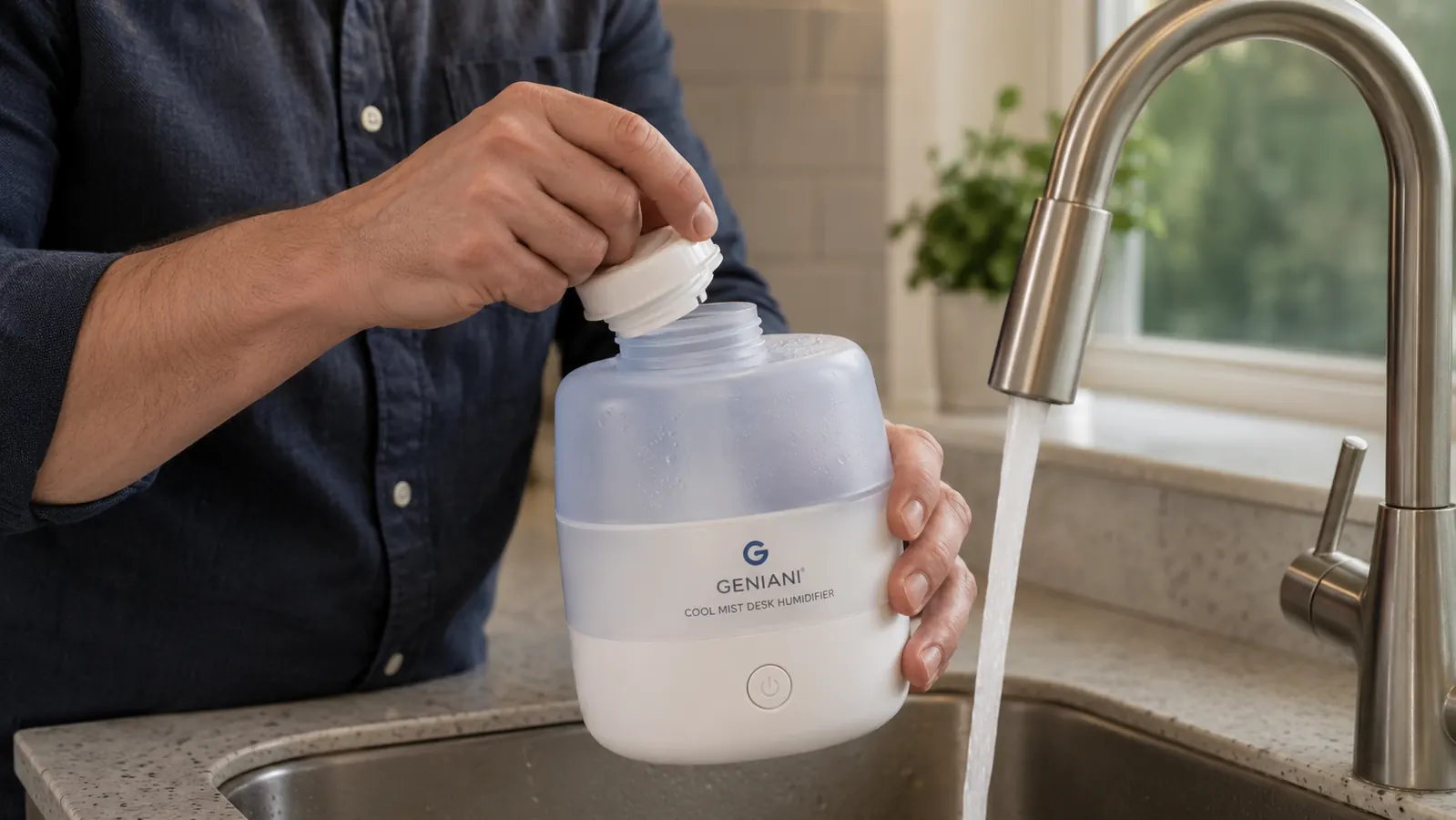
My desk sits in a converted spare bedroom with hardwood floors and almost no ambient humidity once the furnace kicks on in November. I keep the GENIANI humidifier on the left corner of the desk, about two feet from where I'm sitting, running on the low mist setting for most of the workday. Filling the 250 milliliter tank takes about fifteen seconds at the bathroom sink down the hall, and on low output it runs a little over eight hours before the auto shut-off kicks in, which lines up almost exactly with my workday.
The first week I ran it on high just to see what it could do, and honestly that was overkill for a desk-sized zone. The mist output on high left a faint dampness on the desk surface within an hour, nothing that damaged anything, but more than I needed. I dropped it to low by day three and that's where it's stayed since. If you're setting one of these up for the first time, start low and adjust up rather than the other way around, and give it a day or two before deciding the output is wrong for your space.
I refill it most mornings before I start work, sometimes topping it off again around 2pm if I ran it on medium the day before. That's a habit now, not a hassle, but I want to be upfront that this isn't a set-it-and-forget-it appliance the way a large room humidifier can be. The small tank is the tradeoff for the small footprint, and after three months I've made peace with that tradeoff because the desk space it saves matters more to me than the extra refill.
The auto shut-off feature has come in handy more than once. I've forgotten it was running and walked away for a client call across town, and both times it shut itself off cleanly once the tank ran dry instead of running the ultrasonic plate dry and burning anything out. That's a small detail, but it's the kind of thing that tells you a company thought about how people actually use the product, not just how it photographs. I also appreciate that there's no fussy pairing app or Bluetooth setup involved, you fill it, you set the dial, and it runs.
One thing I didn't expect going in was how much the light hum of the mist actually helped me focus. It's not loud enough to call white noise, but it's a steady, low presence that seems to smooth out the silence of an otherwise quiet spare bedroom office. A couple of clients who've since bought their own units mentioned the same thing without me bringing it up first, so I don't think that's just me.
Humidity Levels: What Actually Changed in My Office
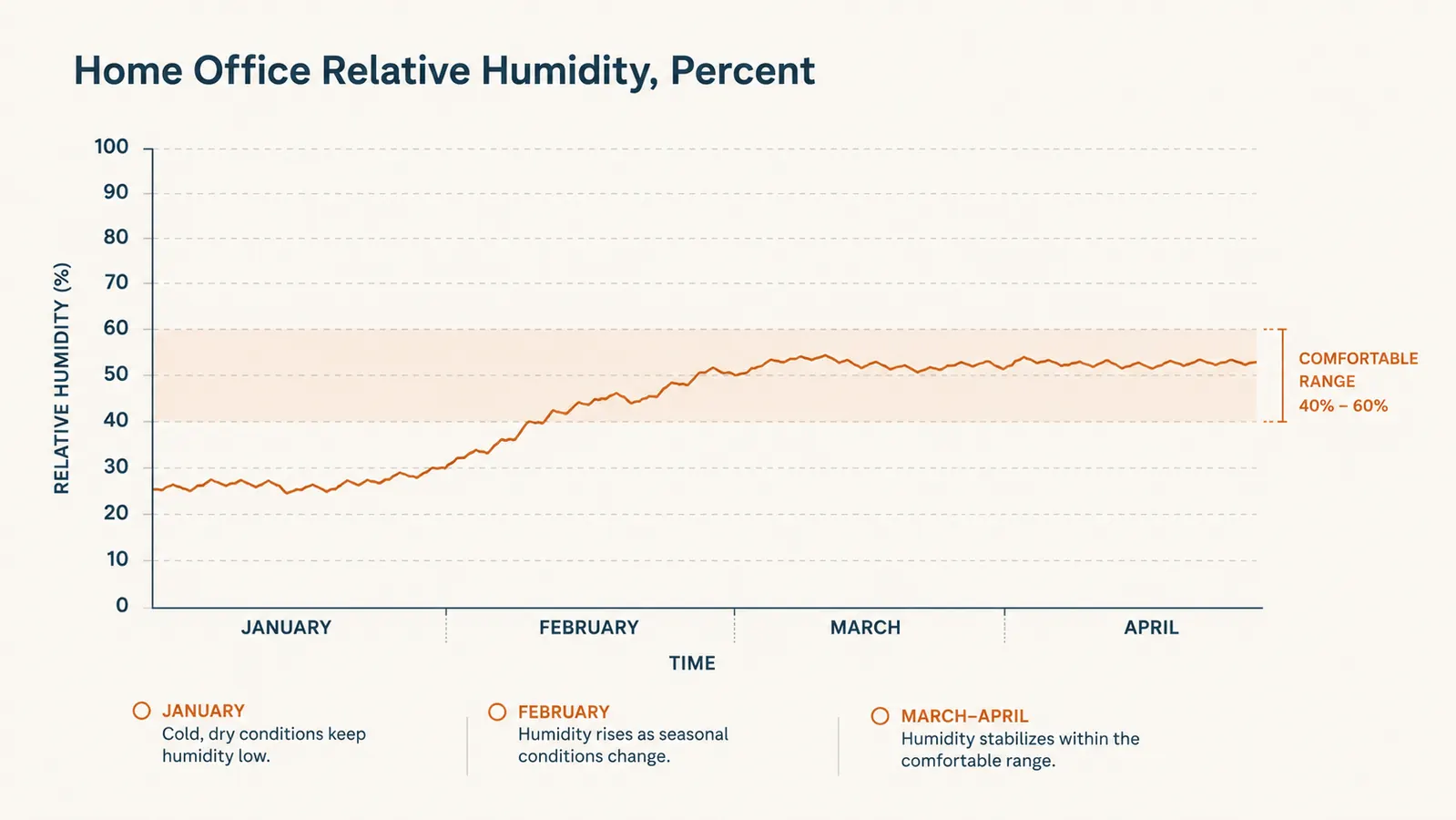
I've had a cheap digital hygrometer sitting on my bookshelf for years, mostly for tracking humidity around my houseplants, and I started logging the reading near my desk once the GENIANI unit had been running for a few weeks. Before I started using it, my office was sitting between 20 and 25 percent relative humidity through most of a Columbus winter, which is well below the 30 to 50 percent range most doctors and HVAC people recommend for comfort and sinus health. With the humidifier running through the workday, my desk-area reading climbed to a fairly stable 35 to 40 percent.
That's not whole-room humidity, and I want to be clear about that. Walk ten feet away to my bookshelf and the reading drops back closer to the low 20s. This unit conditions the air immediately around it, not the entire room, which is exactly what I expected going in given the tank size and mist output. If you're trying to fix humidity for an entire home office, not just the zone where you sit, that's a different product entirely, and I laid out that exact comparison in a separate piece looking at this desk unit against a full-size room humidifier for anyone weighing the two.
The change in how my hands and face felt by the end of the day was noticeable within about ten days. I'd been dealing with cracked skin around my knuckles every winter for years and chalked it up to just getting older. Turns out a lot of that was the desk-level dry air, not my age. My eyes stopped feeling gritty by mid-afternoon too, which matters more than it sounds like when you're staring at a monitor for eight hours straight, and I noticed I was reaching for lip balm far less often by the second week.
By month two I started tracking a rough one-to-ten stiffness and dryness score just for my own curiosity, jotting a number in my desk notebook most mornings. It's not scientific, but the trend was consistent, high sixes and sevens in the first week logging it, down to twos and threes by the start of month three. Static shocks off my keyboard and the metal desk frame also basically disappeared, which was a small but genuinely welcome side benefit I hadn't expected when I bought it.
Noise, Build Quality, and What's Held Up (and What Hasn't)
Noise was my biggest concern going in, since I'm on calls most of the day and didn't want anything humming in the background. The ultrasonic mechanism in the GENIANI is genuinely quiet, quieter than my desktop computer's fans honestly, and nobody I've called with has ever mentioned hearing it. There's a faint gurgle when the tank gets low, which is actually useful because it tells you it's about time to refill before the auto shut-off triggers.
The plastic housing has held up fine with daily handling, no cracks, no discoloration from being near the desk lamp. Where I've had to stay on top of maintenance is the tank interior. Columbus tap water isn't the softest, and after about three weeks I started seeing a thin white mineral film building up along the waterline inside the tank. That's normal with hard water in any ultrasonic humidifier, not a defect, but it means a weekly wipe-down with a bit of white vinegar is part of owning this thing, not optional.
I skipped that cleaning routine once for about two and a half weeks during a busy stretch, and the mist output noticeably weakened, plus there was a faint musty smell when I finally opened the tank. A ten minute vinegar soak fixed it completely, but it was a good reminder that this isn't an appliance you can ignore entirely. If you're not someone who'll remember a weekly cleaning task, factor that into your decision before buying, or at minimum set a recurring reminder on your phone the way I eventually did.
Tradeoffs and What I'd Consider Instead
The tank size is the honest tradeoff here, and it's worth repeating because it's the thing most people underestimate before buying. At 250 milliliters, this is meant for a single desk or a small nightstand, not a bedroom or a home office larger than roughly 150 square feet. I looked at a couple of larger tabletop units before settling on this one, and the bigger models run longer between refills but take up real desk real estate I didn't want to give up.
I also considered just running a large console humidifier for the whole room instead, which is what I eventually tested for the comparison piece I mentioned earlier. That approach fixes the whole-room number but costs more upfront, takes up floor space, and honestly wasn't necessary for what I needed, which was relief right where I sit for eight hours a day. For anyone who's dealt with the cracked-skin, dry-eyes version of this problem the way I have, I wrote up the full story of how this specific humidifier fixed my dry eyes and cracked knuckles after a rough couple of winters without one.
One more honest note on tradeoffs. The GENIANI unit doesn't have a built-in hygrometer or humidity readout, so you're either eyeballing it or buying a cheap separate hygrometer like I did. That's a minor cost, but it's not included, and I think most buyers assume these desk humidifiers show you a number when they don't. I've also put together a practical walkthrough on getting the most out of a desk humidifier through a full winter if you want the setup and maintenance routine spelled out step by step.
I'll also mention filtered versus tap water, since it came up with two different clients. I've run mine on straight Columbus tap water the entire three months and the mineral buildup I described earlier is the direct result. Switching to distilled water would slow that buildup down considerably, at the cost of buying jugs of distilled water regularly. I haven't bothered, because a weekly vinegar rinse takes less effort for me than a standing grocery run, but it's a real option worth knowing about if cleaning isn't your thing.
What I Liked
- Genuinely quiet, never audible on calls or Zoom recordings
- Auto shut-off has reliably protected the unit when I forgot it was running
- Noticeably raised humidity in the immediate desk zone within about two weeks
- Small footprint that doesn't eat up desk space
- Simple to fill and simple to operate with basic mist-level controls
Where It Falls Short
- 250 milliliter tank needs refilling once or sometimes twice a day on higher settings
- Mineral buildup requires a weekly vinegar clean, skipping it weakens output fast
- Only conditions the air near the desk, not the whole room
- No built-in humidity readout, so you need a separate hygrometer to track results
- High mist setting can leave a damp film on the desk surface if left running too long
It's not fixing my whole house. It's fixing the eight hours a day I actually spend sitting in one specific chair, and that turned out to be the part that mattered.
Who This Is For
If you work from a desk in a dry climate or a heated home through the winter, and your symptoms show up specifically at your desk, cracked knuckles, dry eyes by afternoon, static shocks off your keyboard, this is built for exactly that problem. It's also a smart, low-cost first step if you're not sure yet whether a full room humidifier is worth the investment for your space. GENIANI made this one small and simple enough that trying it out isn't a big commitment either way, and the low running cost means you're not out much if it turns out you need a bigger unit later.
Who Should Skip It
If your whole home office feels dry, not just the area right around your desk, or if you're not going to remember a weekly tank cleaning, this specific unit will frustrate you. Skip it and look at a larger console humidifier sized for your actual square footage instead, or read through the comparison I put together before deciding which direction makes more sense for your setup and your tolerance for maintenance.
Ready to Stop Fighting Dry Desk Air Every Winter?
Three months in, the GENIANI Portable Cool Mist Humidifier is still running on my own desk every single day. See today's price and tank specs on Amazon before you decide.
Amazon Check Today's Price on Amazon →