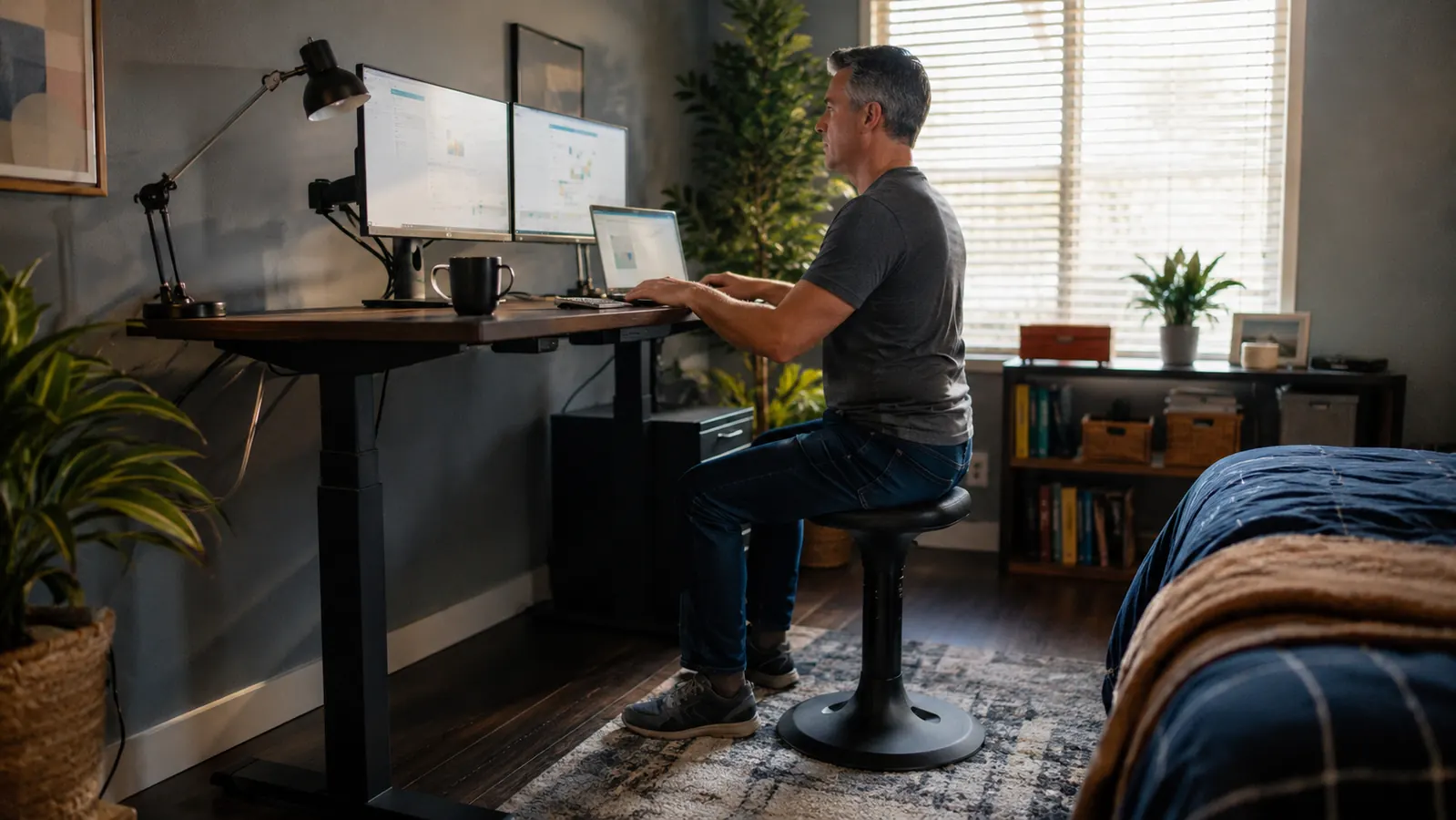
A wobble stool doesn't work like a chair, and treating it like one for your first week at the desk is the fastest way to end up sore, frustrated, and sitting back in your old chair by Friday. I've set up dozens of home offices for remote and hybrid workers here in Columbus, and I see the same mistake play out almost every time: someone buys a wobble stool, sits on it fully engaged for eight straight hours on day one, and quits before their core muscles ever get a real chance to adapt. The stool isn't usually the problem. The pace is.
I went through that same learning curve myself with the SONGMICS Ergonomic Wobble Stool at my own desk. The height-adjustable base and the swivel, non-slip top make it one of the more forgiving active-sitting stools on the market, but forgiving doesn't mean instant. What actually decides whether a wobble stool sticks around your office for years, instead of getting shoved in a closet after two weeks, is the transition process you follow in the first ten days. Here's the five-step plan I use with the SONGMICS, in order, and it's the same plan I hand to anyone I'm setting up who wants to try active sitting without wrecking their back in the process.
Ease Into Active Sitting the Right Way
The SONGMICS Ergonomic Wobble Stool adjusts from 23.6 to 33.3 inches with a swivel top and a wide, non-slip base, which is what makes the gradual transition below possible in the first place. It's the same stool I use at my own desk, and it's the one I point people to first when they want to try active sitting.
Amazon Check Today's Price on Amazon →Step 1: Start With Short, Timed Sessions
Active sitting works because a wobble stool never lets your core fully relax the way a normal chair seat does. Your hips, lower back, and legs are making tiny corrections the entire time you're on it, which is exactly the point, but it also means those muscles fatigue faster than you'd expect if you've spent years in a padded office chair. Trying to power through a full workday on the SONGMICS the first time you use it is the single fastest way to end up sore enough to quit.
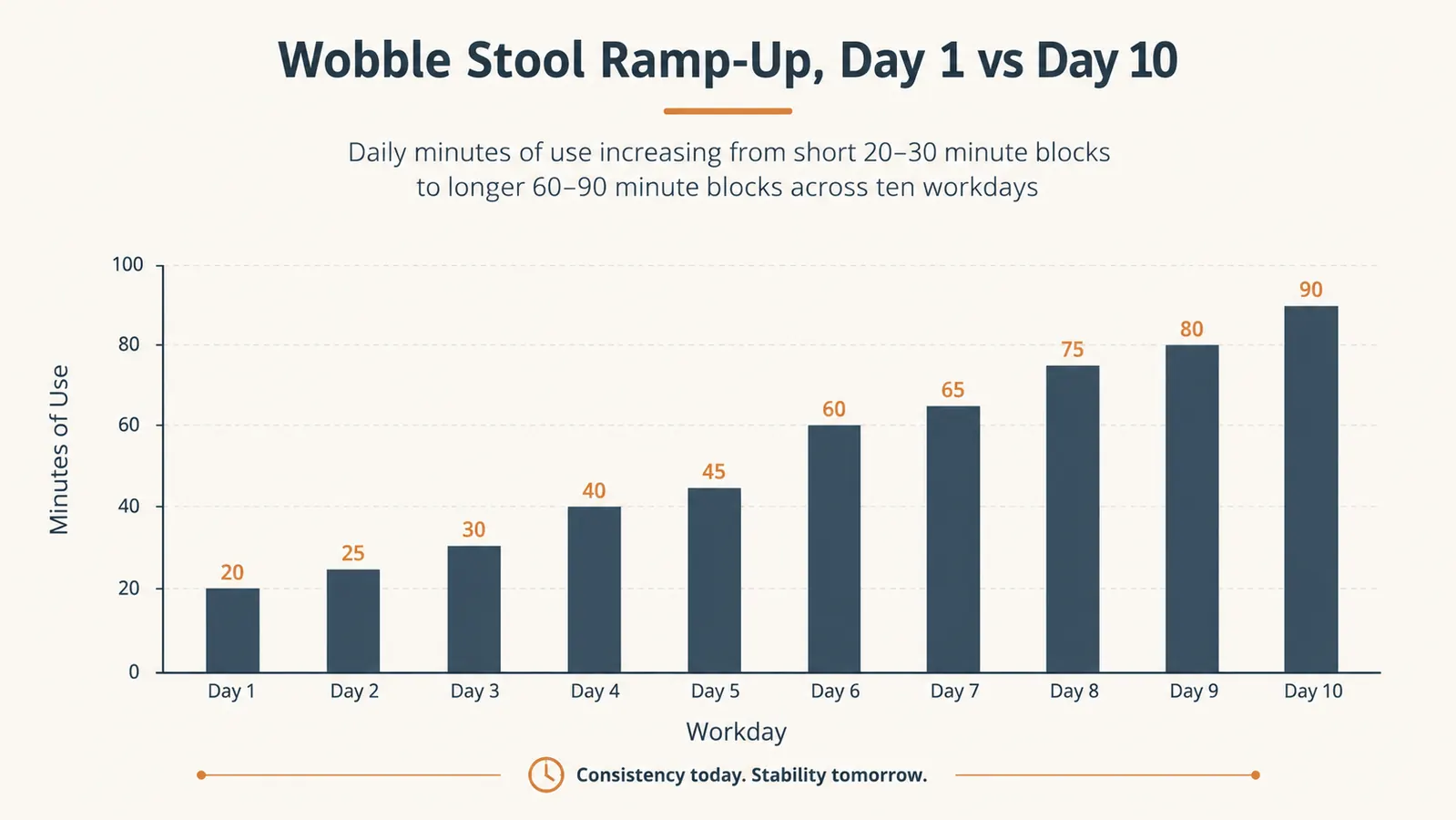
For your first three or four days, set a timer for 20 to 30 minutes at a stretch. Sit through a block of emails or a single meeting, then rotate back to your regular chair. Do that two or three times a day rather than one long session. By the end of week one, most people can comfortably stretch those blocks to 45 minutes to an hour without any real effort, simply because the stabilizing muscles around the hips and lower back have started adapting.
I stayed on that 20 to 30 minute rhythm for my first five days on the SONGMICS before pushing past an hour at a time. It felt slow, but it's the reason I never had to take a full break from the stool the way a coworker of mine did after trying to sit on hers for six hours straight on day one and giving up by Thursday.
Weekends are a good time to test slightly longer sessions too, since there's less pressure to power through a meeting if your legs need a break halfway. I used a few Saturday mornings early on to see how long I could comfortably sit before my form started to slip, which gave me a much better sense of my real pace than trying to guess during a packed workweek.
Step 2: Set the Height Before You Sit Down, Not After
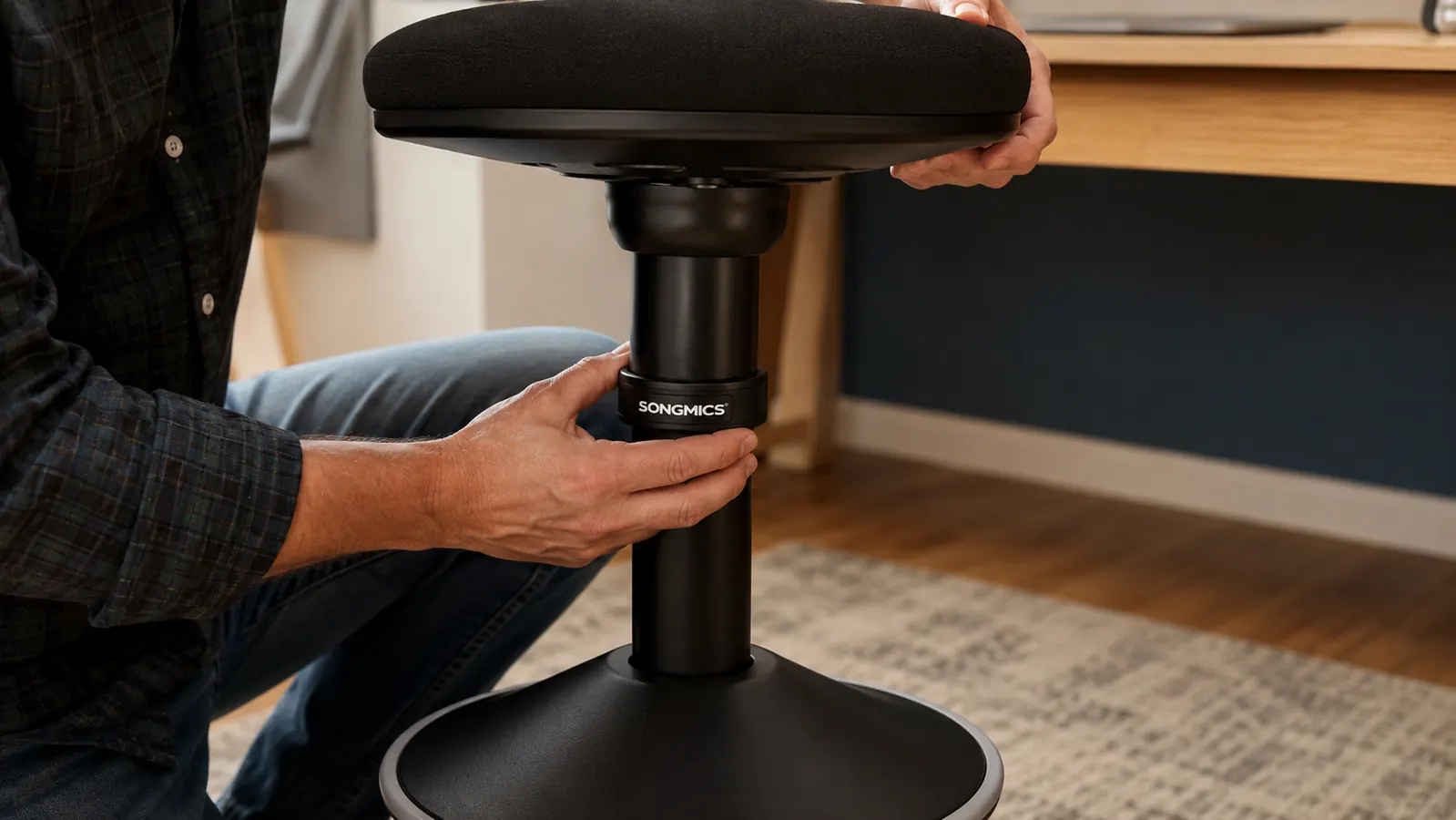
The SONGMICS adjusts from about 23.6 to 33.3 inches, which covers most standing desks, but the right height isn't a guess you make once and forget. Sit on the stool next to your desk and check where your elbows land relative to your keyboard. Your forearms should be roughly level with the desk surface, not reaching up or dropping down to type, the same rule that applies to any desk chair.
Because a wobble stool moves under you, a height that's even an inch off gets magnified fast. Too low, and you'll find yourself hunching forward to reach the keyboard, which defeats the entire purpose of switching to active sitting in the first place. Too high, and you'll be gripping with your toes just to stay balanced instead of sitting relaxed and upright. Adjust the SONGMICS in small increments, sit for a minute, and reassess before locking it in.
I check my own height setting every few months, honestly, because sitting posture drifts over time as you get more comfortable on the stool and naturally settle into a slightly different position. It takes thirty seconds to loosen the adjustment collar, reset the height, and tighten it back down, and it's worth doing whenever you notice yourself leaning or reaching more than usual.
It's worth doing this height check any time you change shoes too, believe it or not. A half-inch difference between sneakers and bare feet is enough to change how your feet plant on the base ring of the SONGMICS, and a stool that felt stable in the morning can feel slightly off by the afternoon if you've swapped footwear.
Step 3: Build a Rotation With a Regular Chair
A wobble stool works best as part of a rotation, not a full replacement for your desk chair, at least for the first month or two. I still keep a regular chair within arm's reach of my desk and split my day roughly in half between the two. That split has done more for my posture over time than trying to force the SONGMICS to carry an entire eight-hour workday ever could.
The reason is simple: a wobble stool has no backrest by design, since the constant small movement is what keeps your core engaged. That's effective in shorter stretches, but by mid-afternoon most people, myself included, want something to lean back into for a video call or a stretch of deep-focus work. Planning for that rotation from the beginning, instead of treating a return to your old chair as failure, is what keeps people using an active-sitting stool consistently instead of burning out on it in week three.
If you're weighing whether a wobble stool or a more traditional option fits your setup better, it's worth reading how it stacks up against a drafting chair before you decide how much rotation you actually need. Some home offices genuinely do better with a stool as a part-time tool rather than the only seat in the room, and that's a fine outcome too.
I keep my regular chair positioned right beside the SONGMICS so switching between the two takes seconds, not a rearrangement of my whole office. The easier that physical switch is, the more likely you are to actually use the rotation instead of defaulting back to one chair out of convenience.
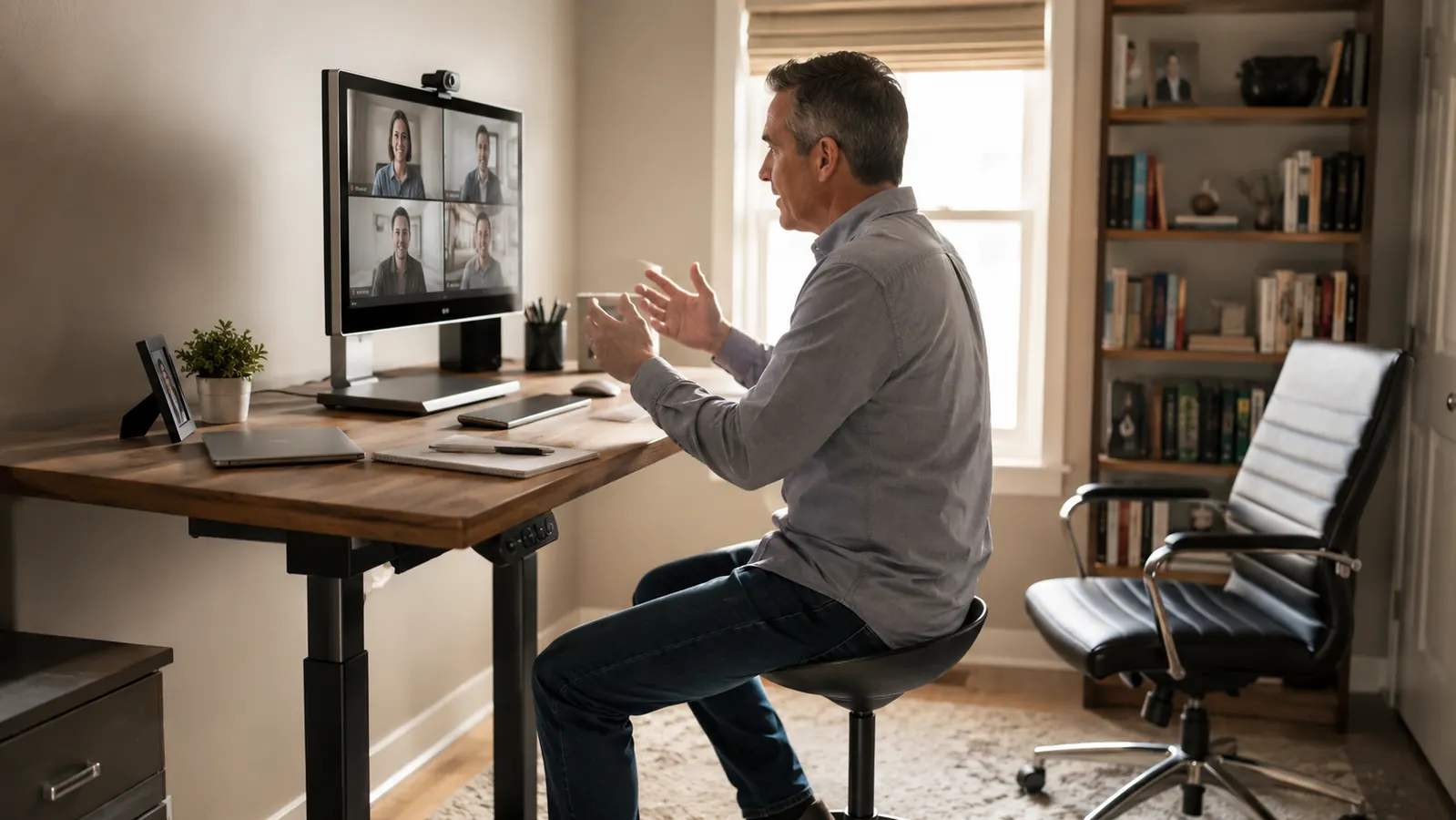
Step 4: Recheck Your Monitor and Desk Setup
Active sitting shifts your torso slightly more than sitting still does, small sways forward and back, side to side, as your core makes constant micro-adjustments. Most people don't notice it consciously, but it can be enough to change how close your face ends up to the monitor compared to sitting stationary in a fixed chair.
Once you've settled into a comfortable rhythm on the SONGMICS, usually by the end of week one, check your monitor distance again. An arm's length away, roughly 20 to 28 inches from your eyes, is still the right target, but it's worth re-measuring from the stool rather than assuming your old chair's setup still applies exactly. The same goes for your keyboard and mouse position, since the tiny movement of active sitting can nudge your reach over the course of a session.
This step gets skipped constantly, and it's a shame, because getting the timing and height right on the wobble stool does very little for your posture if your monitor is still positioned for a completely different sitting position. Five minutes of rechecking your desk layout after your first real week on the stool locks in the rest of the work you've already put in.
This is also a good moment to glance at your cable management and anything sitting on the floor near your feet. A wobble stool's base needs a clear, flat patch of floor to rock on safely, and a stray charging cable or a bag left under the desk is enough to catch a foot mid-adjustment.
Step 5: Know the Difference Between Adjustment Soreness and a Warning Sign
Some mild soreness through the lower back, hips, and inner thighs during your first one to two weeks on a wobble stool is normal and expected. I felt it through my own first ten days on the SONGMICS, and it faded almost completely by week three as those stabilizing muscles caught up. That kind of soreness is a sign the stool is doing its job, not a sign something's wrong.
Sharp pain, soreness that doesn't ease up overnight, or pain that gets worse instead of better as the days go on is a different story, and that's a signal to shorten your sessions or drop back to a lower height rather than push through it. If you have an existing back or hip condition, it's worth testing a wobble stool cautiously and checking with a doctor before committing to daily use. This guide is about building a habit safely, not a medical recommendation.
I go into more detail on what four months of daily use actually felt like, including a few things I'd have done differently, in the honest review I wrote after four months on the SONGMICS stool. If you want the long version of what to expect past the first month, that's the place to look.
One small thing that helped me physically was a thin rug under my desk. My office has hardwood floors, and the SONGMICS's rubber base grips carpet and rugs noticeably better than bare wood, which made the first couple of weeks of adjusting my balance considerably less stressful.
What Else Helps
A wobble stool handles the biggest part of active sitting, but it isn't the only piece. Standing up and walking for a couple of minutes every hour, stool or not, keeps your hips and lower back from locking into any one position too long. A few basic desk stretches, rolling your shoulders back and gently extending your lower back, take under a minute and pair well with the rotation described in step three. Good footwear matters too, since a stool this responsive telegraphs every bit of instability straight up through your feet. For a deeper list of the actual benefits, I put together ten reasons active sitting improves posture that goes beyond what any single stool can cover on its own.
The stool isn't what makes people quit active sitting. Sitting on it for eight straight hours on day one is what makes people quit.
Ready to Make the Switch to Active Sitting?
The SONGMICS Ergonomic Wobble Stool's adjustable height and non-slip swivel base are what make this five-step transition possible in the first place, easing in with short sessions, then building up from there. It's the same stool I've used at my own desk for months, and it's still the first one I recommend to anyone starting from scratch.
Amazon Check Today's Price on Amazon →