
Wrist pain from typing almost never comes from the keyboard itself. It comes from the angle your wrists sit at when the keyboard is sitting flush on a hard desktop, which forces your hands up and back for hours at a stretch. I have set up close to sixty home offices for remote workers around Columbus, Ohio over the past several years, and a clamp-on keyboard tray, specifically the VIVO Keyboard Tray, is one of the cheapest fixes I recommend to anyone typing more than four hours a day.
At a budget-friendly price point, it is not a fancy piece of gear. It is a sliding steel platform that clamps to the underside of your desk with no drilling required, and it drops your keyboard and mouse a couple inches below desktop height, right where your elbows actually want them. I have installed this exact VIVO tray for clients who tried wrist braces, gel pads, and expensive ergonomic keyboards first, and the tray is usually what finally moves the needle. Here are ten specific reasons it works.
Your Desk Height Isn't Neutral. It's Just What the Manufacturer Guessed.
Standard desks are built to a generic 29-inch average, not to your elbows. A keyboard tray corrects that in five minutes without a screwdriver touching your desktop. See today's price on the VIVO Keyboard Tray.
Amazon Check Today's Price on Amazon →A Keyboard Tray Drops Your Hands Below Elbow Height
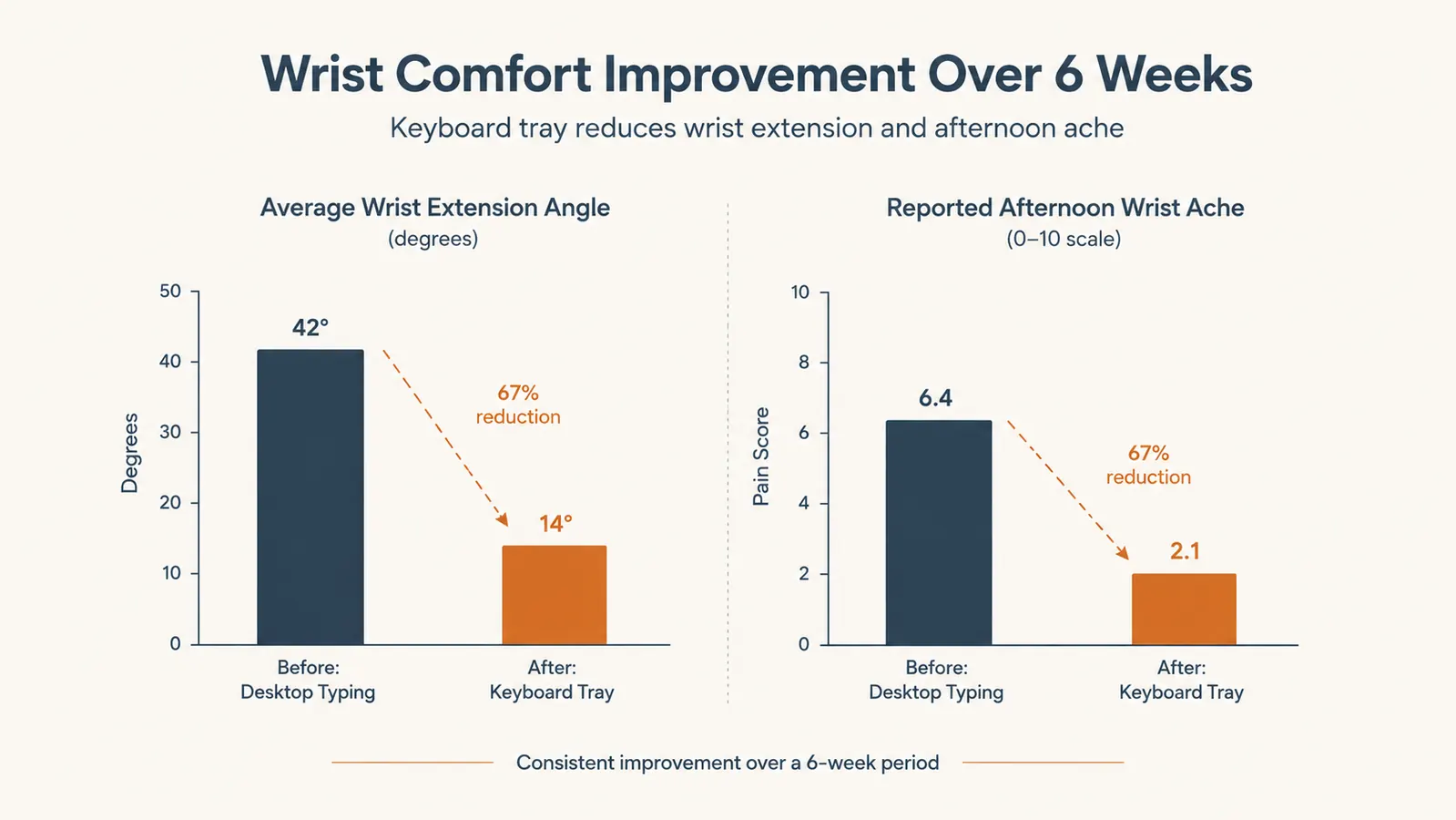
Typing on a flat desktop pushes your wrists into extension, meaning they bend upward toward your forearm for the entire session. A keyboard tray moves the whole setup below desktop height, which lets your wrists drop into a straight, neutral line instead of cocking backward all day. That single change is the biggest driver of the relief people report in the first week. I have watched this fix mild, nagging wrist ache in clients faster than any wrist rest or cushion I have ever tried, because it addresses the actual angle instead of padding a bad one.
A Keyboard Tray Kills the Wrist Extension That Wears You Down
Wrist extension held for hours at a time is the same motion behind a lot of repetitive strain complaints, and eventually things like carpal tunnel syndrome. Lowering the platform even two or three inches takes your wrists out of that extended position for the entire workday, not just during a stretch break. Clients who switch to a tray tell me the ache that used to show up by 2pm just stops showing up at all. It is a small mechanical change with an outsized effect on how your hands feel by Friday afternoon.
A Keyboard Tray Gives Your Forearms Something to Rest On
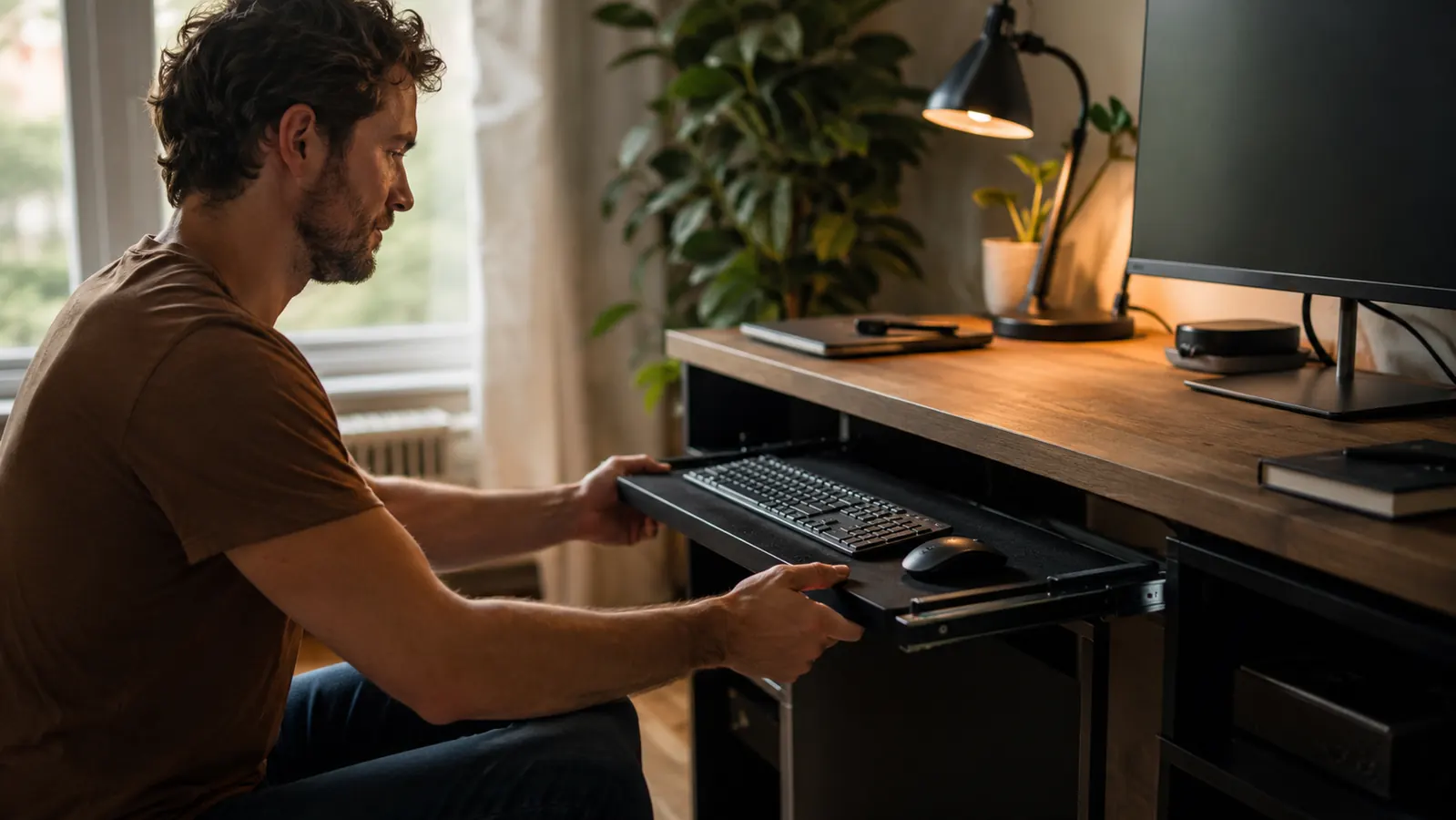
Most flat-desktop setups leave your forearms floating with nothing to rest on, so your shoulders and neck end up doing work they were never meant to do. The tray's 20-inch platform is wide enough, with room on the slide-out for a mouse, so your forearms rest on a stable surface instead of hovering in midair. That support alone takes a surprising amount of tension out of the upper back for people who sit through six or seven-hour workdays without much movement in between.
A Keyboard Tray Fixes the Problem a Standing Desk Alone Can't
A lot of the home offices I set up already have a standing desk, and clients assume that alone solves ergonomics. It does not fix keyboard height on its own, because most sit-stand desktops are still too tall for proper wrist position even at the lowest setting. Adding a keyboard tray under a standing desk closes that gap at both sitting and standing height, since the tray adjusts independently of the desktop. I get into the full sit-versus-tray breakdown in <a href="/vivo-keyboard-tray-vs-fixed-desk-typing">VIVO Keyboard Tray vs typing directly on the desk</a>.
A Keyboard Tray Clears Real Estate for Your Mouse
Once the keyboard drops onto its own platform, the desktop above opens back up for a full mouse pad, a notepad, or a second monitor stand without everything feeling cramped. I have had clients tell me this was the reason they finally stopped elbowing their coffee off the desk every other week. It is a small quality-of-life win that has nothing to do with wrists directly, but it makes the whole setup feel less crowded and easier to actually use.
A Keyboard Tray Adjusts to Fit the Person, Not the Desk
Every person's ideal typing height is different based on chair height, torso length, and desk height, which is exactly why one fixed desktop rarely works for everyone in a household. The tray adjusts up, down, and swivels, so two people sharing the same desk, or the same person switching between sitting and standing, can each dial in their own angle in a matter of seconds instead of just living with whatever height the desk shipped at.
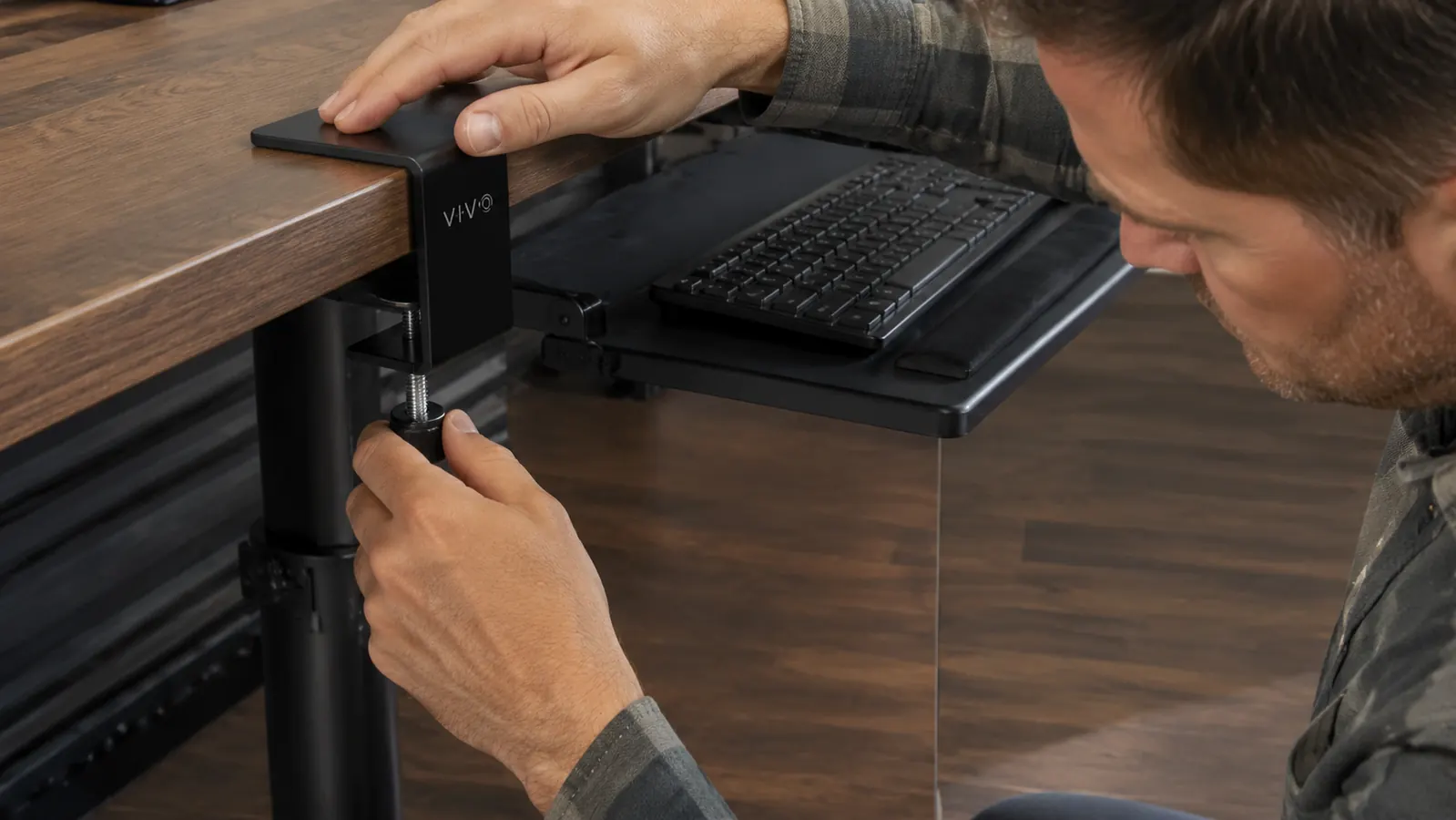
A Keyboard Tray Skips the Drilling and Still Holds Steady
A lot of the ergonomic gear I recommend requires drilling into a desk that clients either rent, share, or just do not want to put holes in. The C-clamp mount tightens under the desk edge and holds firm without a single screw into the desktop itself, which matters more than people expect when the desk is a shared family piece or a rental apartment fixture. For the full walkthrough, see <a href="/how-to-install-clamp-on-keyboard-tray">how to install a clamp-on keyboard tray</a> without drilling your desk.
A Keyboard Tray Pulls Double Duty as a Palm Rest
The lip at the front edge of the sliding platform doubles as a palm rest when you are not actively typing, giving your wrists somewhere to land between keystrokes instead of hovering in the air. That in-between resting position is where a lot of low-grade fatigue builds up over a normal workday, and having a built-in edge to rest on instead of the desk's sharp corner makes a real difference by hour six.
A Keyboard Tray Keeps Your Shoulders From Creeping Up
Wrist pain rarely travels alone. When your hands are too high, your shoulders creep up toward your ears to compensate, and that tension radiates into the neck by the end of the day. Dropping the keyboard to the correct height lets your shoulders settle back down into a relaxed, natural position, which is usually the second thing clients notice after the wrist relief itself sets in.
A Keyboard Tray Pays for Itself Compared to a Physical Therapy Bill
A visit to a physical therapist for wrist or forearm pain runs well past the cost of this entire setup, and most insurance plans still leave you with a copay for every session. Fixing the desk height first is the cheapest experiment you can run before booking an appointment, and in my experience with home office clients, it resolves the issue for most people before it ever gets that far. I wrote up the full <a href="/clamp-on-keyboard-tray-saved-my-wrists">story of a clamp-on tray saving someone's wrists</a> from burnout if you want the longer version.
What I'd Skip
What I would skip is anything that tries to fix wrist position with padding instead of angle. Gel wrist rests, foam cushions, and cheap under-desk pads all treat the symptom without touching the actual problem, which is desktop height. I have also seen off-brand clamp trays that flex or squeak within a month, so if you go this route, stick with a tray built on a solid steel C-clamp system like the VIVO Keyboard Tray rather than the cheapest option in the search results. Read the full honest review if you want the long-term durability details.
The wrist pain was never coming from typing too much. It was coming from typing at the wrong height for six hours a day.
Ten Reasons Is a Lot of Small Wins Adding Up to One Big One
None of these reasons alone will undo years of desk strain overnight. Together, day after day, they add up to wrists that don't ache by the time you close the laptop. That is what a keyboard tray like the VIVO actually delivers.
Amazon Check Today's Price on Amazon →